Choosing the right detector for each area is a key part of fire alarm design under BS 5839. Different technologies suit different risks. Here is a practical overview of the main types we use and where they help.
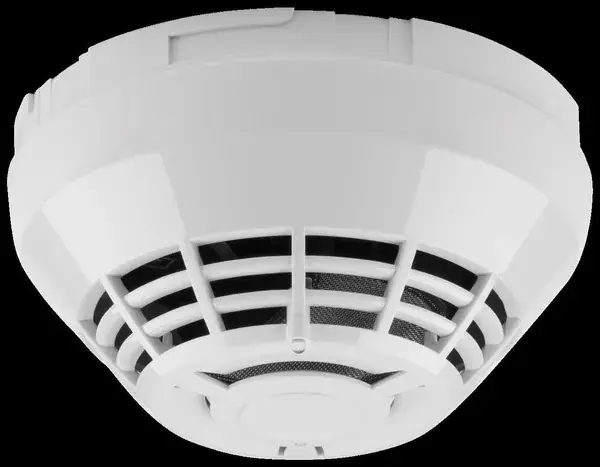
Optical smoke detectors
Optical (photoelectric) detectors sense smoke particles in the chamber. They respond well to smouldering fires that produce visible smoke.
- Best for: offices, corridors, classrooms, bedrooms
- Benefits: good early warning for smouldering fires; widely used and cost-effective
- Watch for: steam, dust or cooking can cause false alarms if poorly sited
Heat detectors
Heat detectors respond to a rise in temperature, either fixed temperature or rate-of-rise. They do not detect smoke.
- Best for: kitchens, boiler rooms, dusty workshops, car parks
- Benefits: fewer false alarms in harsh environments; reliable where smoke detectors struggle
- Watch for: slower response than smoke detectors on smouldering fires
Multi-sensor detectors
Multi-sensor detectors combine smoke and heat (and sometimes CO) in one device. They can be programmed for day/night or change-of-use modes.
- Best for: hotels, schools, commercial kitchens, mixed-use buildings
- Benefits: fewer false alarms; better discrimination; flexible modes
- Watch for: need correct programming and documentation
See our guide: Multi-sensor detectors and day/night modes.
Beam detectors
Beam detectors send a light beam across a large open space. Smoke breaks the beam and triggers the alarm.
- Best for: warehouses, atriums, large halls, high ceilings
- Benefits: covers large areas with fewer devices; suits high ceilings where point detectors are hard to maintain
- Watch for: alignment and building movement need to be considered
Aspirating smoke detection (ASD)
Aspirating systems draw air through a pipe network to a central detector. They can detect very low levels of smoke.
- Best for: data rooms, clean rooms, high-value or high-risk areas, heritage buildings
- Benefits: very early warning; can be concealed; suitable where point detectors are impractical
- Watch for: higher cost; needs careful design and maintenance
Duct probe detectors
Duct probes sample air from ventilation ducts. They detect smoke in the duct before it spreads through the building via the HVAC system.
- Best for: air handling units, return air ducts, buildings with shared ventilation
- Benefits: early warning of smoke in the duct; can shut down fans or close dampers via cause-and-effect
- Watch for: correct siting and airflow; need regular testing as part of maintenance
Linear heat detection (heat wire)
Linear heat detection uses a heat-sensitive cable or wire that triggers when a section reaches a set temperature. It is useful where point detectors are hard to install or maintain.
- Best for: cable tunnels, conveyor systems, car parks, plant rooms, harsh or inaccessible areas
- Benefits: continuous coverage along a run; suits difficult environments; can be more practical than many point detectors
- Watch for: correct temperature rating for the area; damaged cable needs replacement of the affected section
Manual call points
Call points let people raise the alarm by hand. They are required on escape routes in most non-domestic buildings.
- Best for: all escape routes, near exits
- Benefits: simple, reliable way for occupants to raise the alarm
Choosing the right mix
A well-designed system uses different detector types in different areas. Kitchens get heat or multi-sensor; offices get optical or multi-sensor; large open spaces may use beams. The fire strategy and BS 5839 category (L1, L2, etc.) guide the choice.
We design, install and maintain systems across Manchester and the North West. Contact us for a survey and proposal.
Fire detection systems · Fire alarm installation